



Clear aligners have reshaped modern orthodontics, but many people ask if they can do more than straighten teeth. Specifically, can aligners fix jaw problems such as overbite, underbite, crossbite, or an open bite? In many mild to moderate cases, aligners can improve how your teeth fit together and positively influence jaw function. For more complex issues, aligners may be one part of a plan that could also include braces, elastics, expanders, or jaw surgery. Knowing what aligners can and cannot accomplish helps you choose the best path to a healthier bite and a confident smile. If you are wondering, can aligners fix jaw problems in your situation, a comprehensive evaluation is the surest way to find out.
Understanding Jaw Alignment Issues
Jaw alignment describes how the upper and lower teeth and jaws meet when you bite. A well-balanced bite spreads chewing forces evenly, protects teeth and gums, supports the jaw joints, and aids clear speech. When the teeth or jaws do not meet properly, bite problems can develop and lead to symptoms that affect everyday comfort and function.
Common jaw alignment problems include:
- Overbite: The upper front teeth overlap the lower teeth excessively in a vertical direction.
- Underbite: The lower teeth and jaw sit in front of the upper teeth.
- Crossbite: One or more upper teeth bite inside the lower teeth; this can occur in the front, back, or on one side.
- Open bite: When the back teeth touch, the upper and lower teeth fail to meet in the front or back, leaving a gap.
Symptoms tied to jaw alignment problems can include jaw soreness or clicking, headaches, worn or chipped teeth, gum recession, difficulty biting or chewing, speech changes, and mouth breathing. Without treatment, these conditions may contribute to temporomandibular joint (TMJ) strain, periodontal disease, and uneven tooth wear.
How Aligners Work
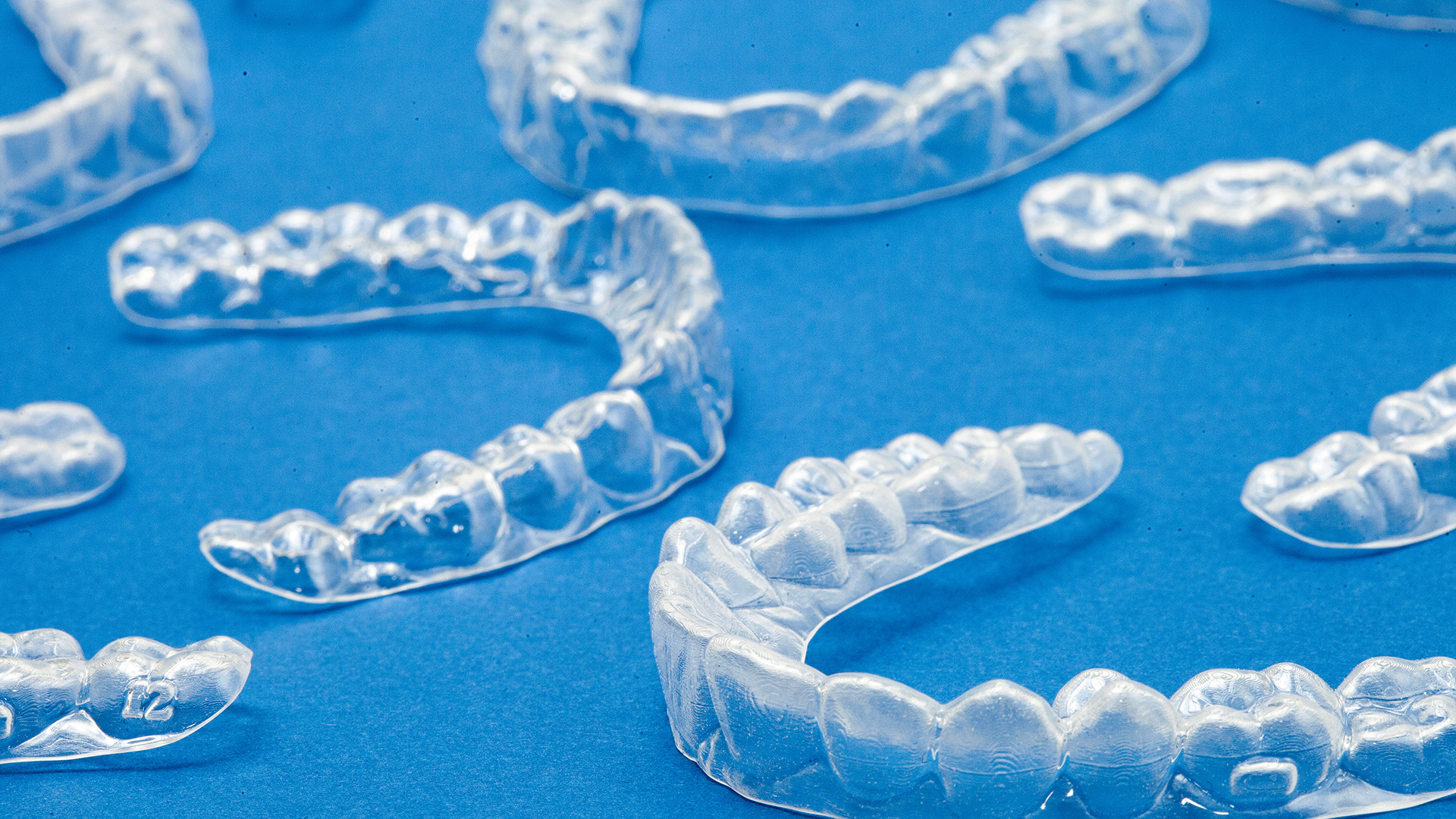
Clear aligners are custom trays that fit over your teeth and apply gentle, controlled forces to move them into better positions. They are fabricated from a digital 3D model of your mouth and delivered as a sequence of trays, with each set guiding your teeth a small step closer to the final alignment.
To achieve gradual movement, each aligner is typically worn 20 to 22 hours per day and changed on a regular schedule, often every one to two weeks. Small tooth-colored attachments may be bonded to certain teeth to help the aligners grip and direct movement. Your orthodontist may also use interproximal reduction (minor reshaping between teeth), elastics, or other features to fine-tune the bite and improve predictability.
Aligners influence jaw position primarily by improving how the upper and lower teeth fit together. By coordinating tooth movement in both arches, and sometimes adding elastics between aligners, the bite can be guided into a more harmonious relationship. This can lessen functional strain and improve how the jaws close. However, when the underlying discrepancy is skeletal, meaning the jaws themselves are mismatched in size or position, aligners alone may not be sufficient and additional treatments may be recommended. Patients often ask, can aligners fix jaw problems if the mismatch is skeletal? In many of those cases, aligners are most effective as part of a combined approach.
Can Aligners Fix an Overbite?
Many overbites stem from tooth position rather than a pronounced mismatch of the jaws. In those situations, aligners can reduce an excessive overbite by moving upper front teeth back and uprighting lower teeth to improve the overlap of the front teeth. With the help of attachments and elastics, aligners can also control the vertical position of teeth to lessen deep bites.
How long treatment takes depends on severity and individual response. Mild overbites may improve within 6 to 12 months, while moderate cases often require 12 to 18 months. Complex deep bites, particularly those involving notable crowding or vertical excess, may take 18 months or longer and sometimes benefit from a short phase with braces or bite turbos for precise finishing.
Patients commonly report more comfortable chewing and reduced wear on the front teeth after aligner therapy. In clinical practice, mild to moderate overbites are consistently corrected with modern aligner protocols, deep bite–focused attachments, and reliable elastic wear when prescribed.
Can Aligners Fix an Underbite?
An underbite occurs when the lower front teeth sit ahead of the upper teeth. This may be primarily dental (tooth position) or skeletal (a larger lower jaw, a smaller upper jaw, or both). Dental underbites are often good candidates for aligners. By moving upper teeth forward, moving lower teeth backward, and coordinating arch width, aligners can improve the bite and enhance smile aesthetics.
Aligners can help correct mild to moderate underbites when supported by attachments and elastics that coordinate how the arches meet. However, if the underbite is driven by a significant difference in jaw size, aligners alone are unlikely to fully correct the issue. In growing patients, orthopedic expanders or functional appliances may be considered to guide jaw development. In adults with severe skeletal underbites, a combined approach using braces or aligners with jaw surgery often provides the most predictable, stable solution.
Key considerations include whether growth is ongoing, the degree of jaw discrepancy, and overall dental and periodontal health. Your orthodontist will evaluate X-rays, photographs, and digital models to determine if aligners alone can achieve a stable correction or if adjunctive treatments are indicated.
Can Aligners Fix a Crossbite?
A crossbite exists when upper teeth bite inside the lower teeth. It can involve the front teeth (anterior crossbite) or the back teeth (posterior crossbite). Crossbites can cause uneven wear, gum recession on affected teeth, and asymmetrical jaw function that may lead to muscle strain and bite instability.
Aligners can treat many crossbites by precisely moving teeth to the correct side of the bite and coordinating the shape of both arches. For single-tooth crossbites or mild segments, aligners with targeted attachments can be very effective. Elastics may be added to help seat the bite and stabilize the correction. For posterior crossbites due to a narrow upper arch, aligners may be combined with an expander in growing patients. In adults who require expansion beyond what tooth movement alone can provide, skeletal expansion or surgically assisted options may be necessary.
Compared with other appliances, aligners offer comfort, ease of hygiene, and good control for many dental crossbites. Traditional braces paired with expanders remain a strong choice for significant transverse deficiencies, especially during growth. Your orthodontist will recommend the approach that reliably corrects the problem and supports long-term stability.
Can Aligners Help With an Open Bite?
An open bite occurs when the upper and lower teeth do not touch when the back teeth are together, leaving a space in the front or back. Causes range from tooth position and tongue posture to skeletal vertical growth patterns. Aligners can help close dental open bites by intruding overerupted back teeth or extruding front teeth, often with the aid of attachments and elastics that guide vertical changes.
Mild to moderate dental open bites often respond well to aligners, especially when habits such as tongue thrusting are addressed and monitored. Skeletal open bites, or those tied to airway issues and vertical growth patterns, may require a broader plan that can include myofunctional therapy, temporary anchorage devices, or jaw surgery for the most stable correction. A comprehensive evaluation will clarify whether aligners can accomplish your goals or whether combination therapy is recommended.
Benefits of Using Aligners for Jaw-Related Bite Problems
When bite issues are primarily dental in nature, aligners offer several practical advantages. Because they are removable, you can brush and floss normally, helping maintain gum health throughout treatment. The smooth, custom-fit trays are comfortable on the cheeks and lips and typically result in fewer emergencies from broken brackets or protruding wires.
Key advantages include:
- Aesthetics: Clear trays are discreet at work, school, and social events.
- Comfort: Smooth edges and gentle, controlled forces tend to reduce irritation.
- Predictability: Digital planning allows your orthodontist to simulate tooth movements and plan for specific bite goals.
- Convenience: Many aligner systems accommodate longer intervals between appointments without sacrificing oversight.
- Hygiene: Easy removal supports better brushing and flossing, reducing the risk of cavities and gum inflammation.
Correcting bite problems delivers long-term benefits such as more even tooth wear, improved chewing efficiency, clearer speech, and less strain on the jaw joints and muscles. A balanced bite distributes forces more evenly, helping protect teeth, restorations, and periodontal tissues over time. While aligners are versatile and effective tools, the best outcomes come from a tailored plan that might include elastics, minor enamel reshaping, or, for certain skeletal problems, a coordinated approach with expanders or surgery.
If you are weighing the question, can aligners fix jaw problems in the context of your symptoms, a personalized assessment will identify which tools can deliver a predictable correction and lasting stability.
Who Is a Good Candidate for Aligner Treatment?
Not every bite problem responds the same way to aligners. The right candidate typically has dental crowding or spacing, mild to moderate overbites, underbites, crossbites, or open bites that are not driven by large skeletal discrepancies. Consistent wear is crucial, aligners must be worn as directed to move teeth predictably.
During your consultation, your orthodontist will consider:
- Type and severity of the bite issue (dental vs. skeletal).
- Growth status and timing for younger patients.
- Health of teeth, gums, and supporting bone.
- Commitment to wearing aligners 20 to 22 hours per day and following instructions.
- Any habits (thumb sucking, tongue posture) that may impact stability.
Based on these factors, we’ll recommend aligners alone or a combination approach to achieve a result that looks great and functions well.
What to Expect During Treatment
Aligner treatment begins with digital scans, photos, and X-rays. Your orthodontist will create a 3D plan that maps out each step of your tooth movement and defines the bite objectives. Most patients receive a series of aligners and instructions for wear and change intervals. Attachments may be placed to guide complex movements, and elastics may be prescribed to help coordinate the bite.
Follow-up visits monitor progress, adjust the plan as needed, and address any areas that require fine-tuning. At the end of active treatment, retainers help maintain your result and protect your investment in a healthier bite.
Bottom Line: Can Aligners Fix Jaw Problems?
Aligners are highly effective for correcting many dental bite problems and can improve the way your jaws function by optimizing how your teeth meet. They are often successful for mild to moderate overbites, underbites, crossbites, and open bites, especially when combined with attachments and elastics. When a bite problem is primarily skeletal, aligners may be part of a larger plan that includes expanders, other appliances, or jaw surgery to achieve a stable, long-term result.
Every smile is unique. A thorough evaluation is the best way to learn whether aligners can meet your needs or whether combination therapy will deliver the healthiest and most predictable outcome. If you have been asking yourself, can aligners fix jaw problems for my bite, schedule a consultation to explore your options and map out the most effective path to a comfortable, well-aligned bite and a confident smile.