



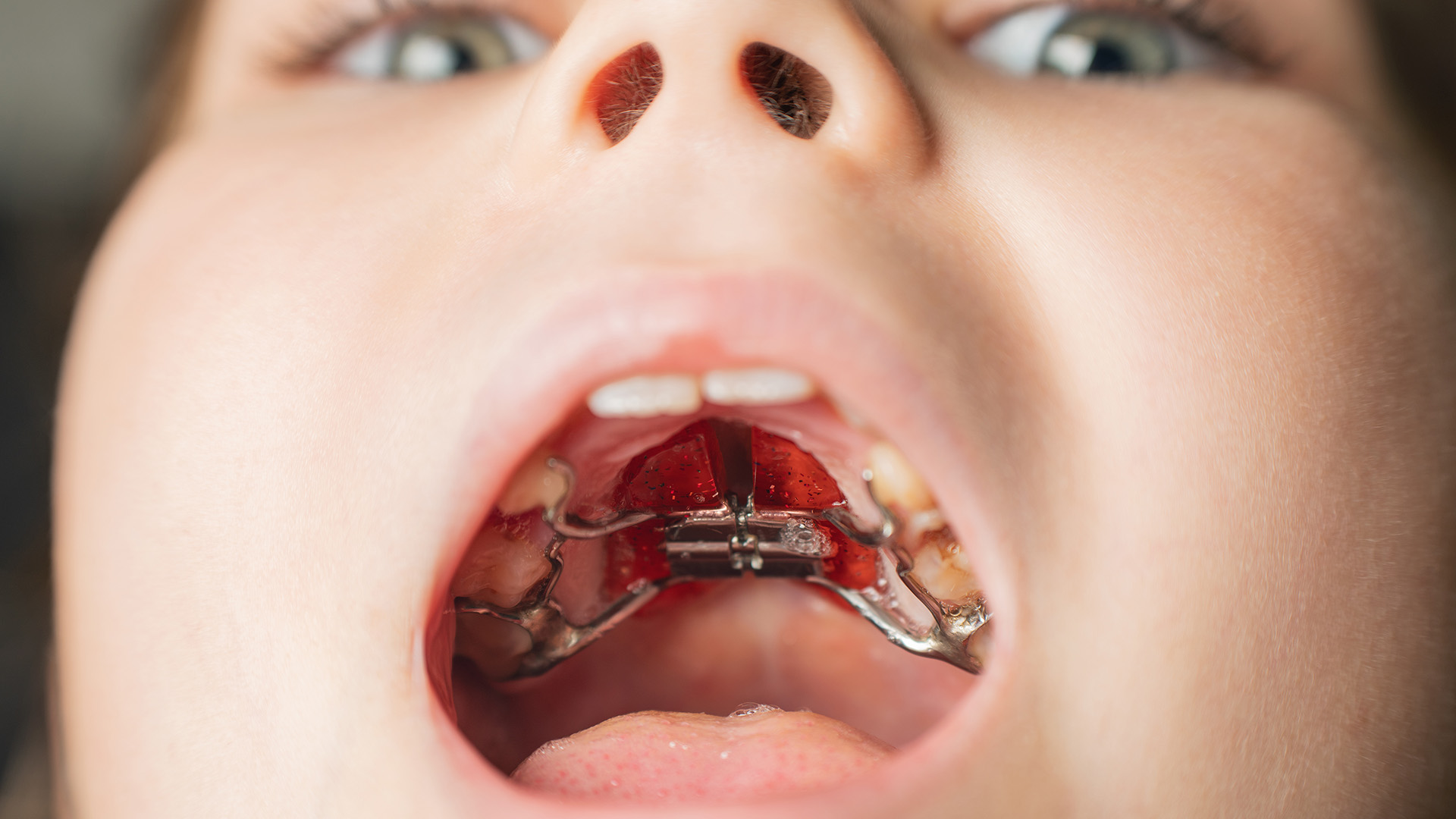
What is a rapid palatal expander? A rapid palatal expander (RPE) is a fixed orthodontic appliance used to widen the upper jaw. By gently separating the midpalatal suture during growth, it creates more space for teeth, improves how the upper and lower jaws fit together, and can support better nasal airflow. An RPE is a type of orthodontic expander most often used in children and early teens as a foundational step before braces or aligners.
What a Rapid Palatal Expander Does
An RPE is a custom palatal expander that fits against the roof of the mouth and attaches to the upper molars. It typically includes bands or a bonded framework on the back teeth, a central expansion screw that activates the appliance, and a metal or acrylic structure spanning the palate. The screw is turned in small increments to produce controlled widening.
Unlike braces, which primarily move teeth along the arch, a rapid palatal expander targets expansion of the upper jaw by influencing the midpalatal suture in growing patients. Slow or removable expanders may move teeth more than bone or work at a gentler pace. An RPE focuses on orthopedic change first, while tooth alignment is generally completed afterward with braces or clear aligners. If you are wondering what a rapid palatal expander is compared with other devices, think of it as an orthodontic expander designed to create skeletal change more efficiently during growth.
Ideal candidates are children and early adolescents, typically ages 7–14, before the midpalatal suture fully fuses. Common reasons for treatment include a narrow upper jaw, posterior crossbite, crowding from limited arch width, and skeletal discrepancies where the upper jaw is constricted relative to the lower jaw. In select older teens and adults, surgically assisted expansion may be recommended.
How a Rapid Palatal Expander Works
Biomechanically, a rapid palatal expander applies lateral forces to the maxillary bones through the molars and palatal framework. These forces open the midpalatal suture in growing patients, allowing new bone to form between the halves of the upper jaw. Some dental tipping can occur, but the primary goal is orthopedic expansion of the maxilla rather than simply moving teeth within the bone.
Treatment occurs in two phases: activation and retention. During activation, the screw is turned according to the orthodontist’s instructions, often once or twice per day, creating small daily increases in width. This phase usually lasts 1–3 months, depending on the amount of expansion needed. After the desired width is reached, the palatal expander remains in place without turning for several months (often 3–6 months) to allow new bone to solidify and stabilize the expansion.
Expected changes include increased arch width, correction of posterior crossbites, and improved space for crowded teeth. Many patients also notice functional benefits, such as easier nasal breathing or reduced mouth breathing, because widening the maxilla can increase nasal cavity volume. Results vary by individual and should be assessed by the orthodontist and, when appropriate, medical professionals involved in airway care.
Preparing for and Receiving an RPE
Preparation begins with a comprehensive evaluation that includes a clinical exam, digital impressions or 3D scans to capture the bite and palate, and X-rays to assess skeletal relationships and tooth development. These records help the orthodontist plan the amount of expansion, evaluate growth potential, and determine whether a rapid palatal expander is appropriate now or should be timed with future growth.
During placement, the bands or bonded framework are fitted to the upper molars, the orthodontic expander is cemented, and the orthodontist confirms a comfortable fit. Patients may feel pressure on the molars and palate at first, and speaking or swallowing can feel different for a few days. A mild lisp and extra saliva are common as the tongue adapts to the appliance.
Activation instructions are reviewed with the patient and a parent or caregiver. Typically, an adult turns the key in the expansion screw at home on a set schedule (for example, one quarter turn once or twice daily). Follow-up visits allow the orthodontist to verify progress, adjust the schedule if needed, and ensure that tissues remain healthy. Patients should not turn the screw more frequently than prescribed. If an issue occurs with the palatal expander, contact the office promptly.
Daily Life with a Rapid Palatal Expander
- Eating: Choose softer foods for the first few days, then return to a regular diet while avoiding very sticky, chewy, or hard items that could loosen the appliance (such as taffy, caramel, ice, or hard nuts). Cut crunchy foods into smaller pieces and chew slowly. Speech typically improves within a week as the tongue adapts to the orthodontic expander.
- Oral hygiene: Brush around the bands and along the gumline after every meal. Use an interdental brush or a water flosser to clean under the framework and around the screw. Daily fluoride toothpaste and, when recommended, a fluoride rinse help protect enamel. Floss as directed, threading under the appliance where possible.
- Temporary symptoms: Mild pressure after turns, slight soreness of the teeth, and a small gap opening between the upper front teeth are common as the palate widens. Over-the-counter pain relievers taken as directed, cold foods, and orthodontic wax for any rubbing spots usually help. A tickle or itch in the palate can also occur during active expansion.
- Tracking progress: Parents and patients can watch for signs such as the front-tooth gap, improved bite contact, and easier nasal breathing. Contact the orthodontic office if the appliance becomes loose, if the key will not engage, if there is bleeding or persistent ulceration, or if pain is not relieved with simple measures. Do not skip or add turns without guidance.
Outcomes, Risks, and Aftercare
Most patients reach the planned expansion within a few weeks of activation, followed by several months of retention while new bone fills in the suture. After consolidation, treatment typically transitions to braces or clear aligners to align teeth, close spaces, and refine the bite. The overall orthodontic timeline varies but often ranges from 12 to 24 months, including the expander phase.
Potential risks and side effects include dental tipping instead of pure skeletal expansion, mild gum irritation where the appliance contacts soft tissues, temporary speech changes, and a transient gap between the front teeth. Rarely, one side may expand differently than the other, requiring adjustment. Relapse can occur if retention is inadequate or if turns continue after the goal is reached. Close monitoring, precise activation schedules, and an appropriate retention period help reduce these risks. Using a well-fitted palatal expander and following instructions closely improves predictability.
| Signs of Success | Next Steps |
| Correction of posterior crossbite | Transition to braces or aligners |
| Measured increase in arch width | Maintain oral hygiene around appliances |
| Improved molar and canine relationships | Regular follow-up to confirm stability |
| Radiographic evidence of bone fill | Use retainers or proceed with comprehensive treatment |
Aftercare focuses on maintaining stability and oral health. Regular follow-up appointments confirm the expansion, monitor the health of the tissues, and plan the next phase of treatment. Once the orthodontic expander is removed, retainers or the next orthodontic phase help preserve and build on the results. If you are still asking what is a rapid palatal expander in practical terms, it is the first step that widens the foundation so the rest of orthodontic treatment can align teeth more effectively.