



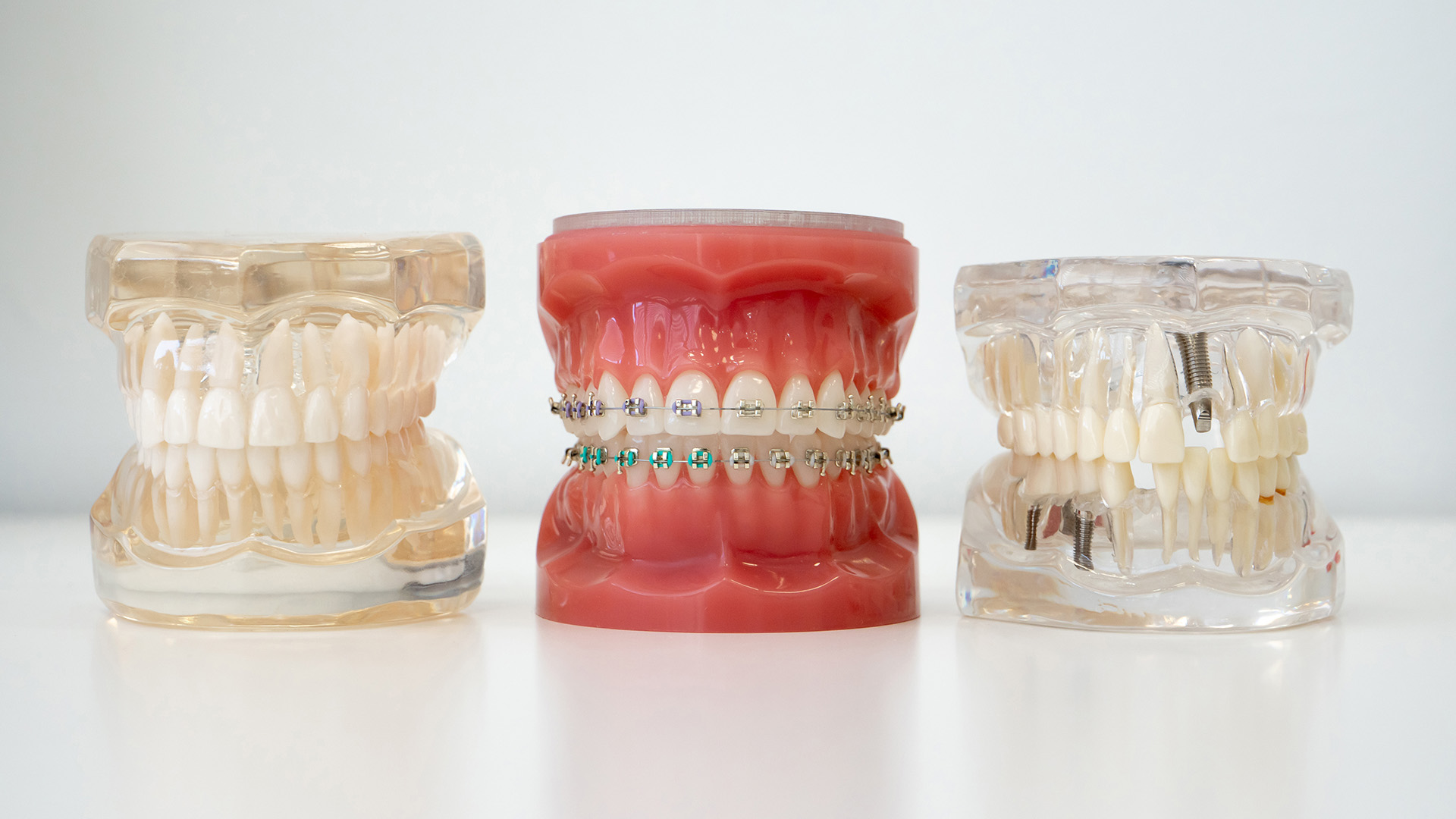
Yes. Many adults with dental implants, crowns, or bridges can still straighten their teeth and improve their bite with braces or Invisalign. Success comes from thoughtful planning. Because implants do not move like natural teeth and certain crowns or bridges need special care, your orthodontist will design a plan that aligns the rest of your teeth around these restorations. Below, we outline how implants and crowns behave, what treatment options are realistic, and what to expect from consultation to completion. If you have ever wondered, can you get braces or Invisalign if you already have dental implants or crowns, the answer is usually yes with the right strategy. We also revisit the question, can you get braces or Invisalign if you already have dental implants or crowns, throughout this guide to highlight key considerations.
How Dental Implants, Crowns, and Bridges Differ from Natural Teeth
A dental implant is a titanium post placed in the jawbone to replace a missing tooth root. After healing, an abutment and crown are attached to restore function and appearance. A crown is a custom cap that covers and protects a compromised tooth. A dental bridge fills a gap left by one or more missing teeth by anchoring a false tooth (or teeth) to crowns on adjacent natural teeth. Implants attach to bone, while crowns and bridges rely on remaining tooth structure for support.
Natural teeth are suspended by the periodontal ligament, a tiny cushioning structure that lets teeth move with gentle orthodontic forces. Implants lack this ligament because they fuse directly to the bone (osseointegration), so they remain stationary and will not move with braces or aligners. Teeth that support crowns and bridges can move orthodontically, but the restorations must be protected to prevent chipping, loosening, or debonding.
Common scenarios include a single implant replacing a molar, multiple implants spanning a space, a full-arch implant restoration, or a mix of porcelain-fused-to-metal and all-ceramic crowns on front teeth. Each situation can be managed with tailored mechanics, bonding methods, and aligner designs that respect the limits of these restorations.
Can You Get Braces or Invisalign with Implants or Crowns?
In most cases, orthodontic treatment is feasible. The primary limitation is that implants cannot move. Your orthodontist will reposition the natural teeth around an implant to improve alignment and bite relationships. With crowns or bridges, treatment is often straightforward, but techniques and forces are adjusted to protect the restoration. If a crown’s contours are worn or not ideal, it may be replaced after orthodontics to fine-tune bite and aesthetics.
Both braces and clear aligners can accommodate fixed restorations, though they do so differently:
- Braces: Brackets can be bonded to porcelain with specialized primers when appropriate, or brackets can be avoided on fragile crowns to reduce risk. Wires may be contoured to bypass an implant, and in select cases an implant site can serve as an anchor point for certain movements of natural teeth.
- Clear aligners (e.g., Invisalign): Attachments are placed on natural teeth, while aligner pressure is relieved around implant crowns. The aligner can be designed with cutouts or relief where an implant crown sits to prevent unwanted forces.
Common treatment goals include aligning crowded front teeth while leaving an implant undisturbed, leveling the bite followed by reshaping or replacing a crown for ideal contacts, or closing small spaces adjacent to a bridge by moving the supporting natural teeth. Orthodontics is also frequently used to create the correct space, angulation, and root positioning before placing a new implant or updating an older crown for the best final outcome. If you are asking yourself, can you get braces or Invisalign if you already have dental implants or crowns, these tailored approaches make it possible in many cases.
Clinical Considerations and Treatment Planning
Your orthodontist will evaluate implant and crown positions, your bite (occlusion), gum and bone health, and how the upper and lower teeth function together. The location of any implant relative to planned tooth movements is critical. If an implant occupies a position that a natural tooth needs to move into, the plan may be modified to move neighboring teeth around it or to coordinate restorative changes later.
Diagnostic records typically include photos, digital X-rays (panoramic and periapical), 3D cone beam imaging when indicated, and digital scans to create precise models. These tools help map safe movements, manage torque near restorations, and determine space requirements for a future implant or restoration.
Coordination with your general dentist or restorative specialist is essential. Sometimes orthodontics comes first to align teeth and create ideal spaces, followed by implant placement or crown replacement. In other cases, a temporary restoration is used during orthodontic treatment and replaced at the end. If a crown’s shape hinders alignment or ideal bite contacts, your team may plan to modify or replace it after teeth are in their best positions. Asking if you can get braces or Invisalign if you already have dental implants or crowns becomes a planning question, and the answer often depends on sequencing and collaboration.
Practical Timeline and What to Expect During Treatment
Most treatment journeys follow four phases:
- Consultation: Discuss goals, review medical and dental history, and evaluate existing implants, crowns, and bridges.
- Planning: Gather records, design tooth movements around restorations, and coordinate with your dentist or specialist.
- Active orthodontics: Wear braces or aligners, attend regular adjustment or progress visits, and follow home-care guidance.
- Restorative follow-up: Finalize any crown replacements, implant restorations, or cosmetic refinements once alignment is complete.
Existing restorations can influence timing and mechanics. Because implants do not move, they can serve as a reference point while nearby natural teeth are repositioned, which can simplify some corrections but limit others. Around porcelain or ceramic, lighter forces and specific bonding protocols help protect the restoration. Aligners may incorporate cutouts or pressure-free zones near implant crowns, which can necessitate additional refinement stages and slightly increase the number of aligners.
If plans change during treatment, your team can adapt. For example, if a compromised tooth requires extraction, you may transition to a temporary tooth in the aligner or a provisional bridge while orthodontics continues. If a crown fractures or its margins are not adequate, it can typically be replaced once key tooth movements are complete. The goal is to keep orthodontic progress on track while safeguarding long-term restorative success.
Maintenance, Risks, and Oral Hygiene During Orthodontic Care
Diligent home care is crucial, particularly around crown margins and implant sites. Follow these guidelines:
- Brush at least twice per day with a soft toothbrush and fluoride toothpaste.
- Clean under and around bridges using floss threaders or interdental brushes.
- For implants, use a soft interdental brush and implant-safe floss to remove plaque at the gumline.
- If you wear aligners, rinse when removed, brush them gently daily, and avoid hot water.
- With braces, consider a water flosser and interdental brushes to clean around brackets and beneath wires.
Potential risks include loosening or chipping of crowns, excess forces on an implant if bite contacts are uneven, root resorption in natural teeth with heavy forces, and gum recession if hygiene or biomechanics are inadequate. Your orthodontist mitigates these risks with controlled forces, routine monitoring, and collaboration with your dentist or periodontist. Report any implant-area discomfort, unusual mobility, sensitivity near a crowned tooth, or gum changes promptly.
If a restoration becomes loose or damaged during treatment, contact your orthodontist first. They will advise whether to pause adjustments and will coordinate with your restorative dentist to repair or secure the crown or bridge. Quick attention helps prevent unwanted tooth movement and protects your bite.
Frequently Asked Questions
- Can you get braces or Invisalign if you already have dental implants or crowns? Yes, in most cases. Implants remain stationary, while natural teeth move around them. Crowns and bridge-supported teeth can move with proper protection.
- Will an implant need to be removed for orthodontics? Rarely. Most plans work around existing implants. In select, complex cases, a non-ideal implant may be revised after orthodontics, but this is uncommon.
- Will brackets or attachments go on crowns? Sometimes. Special primers can bond to porcelain, but clinicians may avoid placing brackets on fragile crowns and use neighbouring teeth for movement instead.
- Are aligners or braces better? Both can work well. The choice depends on your bite, restoration locations, hygiene needs, and treatment goals.
- How long will treatment take? Timelines are often similar to standard cases, though complex coordination with restorations can add time for refinements.
Next Steps: Consultation and Personalized Options
For your first visit, bring a list of your current dental restorations, recent X-rays if available, and any notes from your dentist. Share when your implants or crowns were placed and any symptoms you have noticed, such as sensitivity, gum irritation, or bite interference.
A customized plan should coordinate orthodontic care with restorative dentistry. If you need space created for a future implant, your team will sequence movements to establish ideal spacing and root positioning. If a crown’s shape or position limits alignment, they can coordinate the timing of a replacement for the best final result. You should receive a clear timeline, an estimate of aligners or adjustment visits, and a roadmap for any restorative steps after active orthodontics.
If you have been asking, can you get braces or Invisalign if you already have dental implants or crowns, the most reliable answer comes from an in-person evaluation. Many patients with implants or crowns finish treatment within standard timeframes, although complex cases may take a bit longer due to careful mechanics and coordination. Schedule a consultation to review your options and design a plan that respects your restorations while creating a confident, well-balanced smile.